Origin Energy and Landis+Gyr bring large-scale smart gas technology to Australian homes and businesses
The smart gas rollout will modernise customer and operational services without replacing existing infrastructure.
SYDNEY, June 4, 2026 /PRNewswire/ -- Gas customers across Australia could soon see fewer estimated bills, fewer manual meter readings, and a more modern energy service experience as the country's gas networks begin a large-scale digital upgrade.
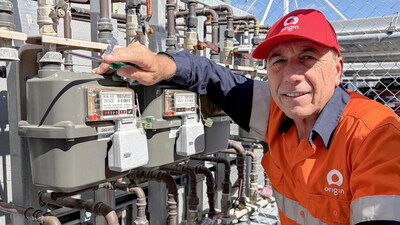
Global energy technology leader, Landis+Gyr (SIX: LAND) today announced a partnership with leading Australian Energy company Origin Energy to modernise its gas network with smart digital technology.
The project marks of the first large-scale efforts in Australia to fully digitise gas network operations across an entire customer base, covering households and businesses across Origin's gas network.
Over the next 18 months, Landis+Gyr will deploy intelligent IoT modules that enable remote meter readings and near real-time data insights, along with communications technology and a data management platform across Origin's existing metering assets.
Origin General Manager LPG, Amber Fennell said, "This upgrade supports Origin's focus on improving the customer experience, while leveraging technology to make better use of existing infrastructure to help modernise Australia's gas networks.
The upgrade will be delivered with no disruption to customers' LPG supply.
Improving data accuracy and billing timeliness by removing manual reads enables us to enhance the customer experience."
Landis+Gyr Senior Vice President, APAC, David Maclean said, "Our Smart Gas technology provides utilities and energy service providers with one of the fastest pathways to digitalisation, enabling improved customer service outcomes, safer installation practices and greater operational efficiencies.
"This milestone marks a significant step forward in bringing intelligent, more flexible energy infrastructure to Australia.
"By enhancing existing meters with Landis+Gyr's Smart Gas solution, Origin Energy can adopt future IoT technologies without replacing their existing assets, improving the customer experience today while building a strong foundation for long-term innovation."
The success of this rollout could support future deployment of the technology across approximately two million Landis+Gyr gas meters already installed across Australia, enabling remote meter readings and near real-time data insights at a broader scale, avoiding large-scale network replacement.
About Origin Energy
Origin Energy is an Australian integrated energy company. Origin is a leading energy retailer with more than 4.8 million customer accounts, approximately 8,100 MW of power generation capacity and is also a large natural gas producer. Origin is the upstream operator of Australia Pacific LNG, its incorporated joint venture with ConocoPhillips and Sinopec, which supplies natural gas to domestic markets and exports LNG under long term contracts.
About Landis+Gyr
Landis+Gyr is a global energy technology leader delivering intelligent solutions that connect devices, data, and decisions across the grid. Our mission is to accelerate the energy evolution through purposeful innovation and trusted partnerships. Trusted by more than 2,000 utilities worldwide, we transform traditional infrastructure into intelligent, networked systems that provide real-time grid visibility and control. With these insights, electric, gas and water utilities can anticipate demand, optimize operations, and deliver energy that is more reliable, resilient, accessible, safe, and sustainable. For more information, please visit our website www.landisgyr.com
Photo: https://mma.prnewswire.com/media/2993044/LandisGyr_smart_gas.jpg
Logo: https://mma.prnewswire.com/media/2287017/5998971/Landis_Gyr_Logo.jpg

 View original content:https://www.prnewswire.co.uk/news-releases/origin-energy-and-landisgyr-bring-large-scale-smart-gas-technology-to-australian-homes-and-businesses-302790193.html