Hyundai Motor Company Charts Profit-Driven Growth Roadmap at 2026 CEO Investor Day
SEOUL, South Korea, Aug. 26, 2026 /PRNewswire/ -- Hyundai Motor Company today announced an aggressive product offensive at its 2026 CEO Investor Day, reinforcing the company's goal of 5.55 million units in global sales by 2030 while also bolstering profitability across the business.
- Hyundai Motor reaffirms its 2030 target of 5.55 million global vehicle sales, representing a global market share of 6%
- Electrified vehicles to reach 60% of sales mix by 2030, up from 23% in 2025
- More than 100 global product launches and refreshes planned by 2030, including 18+ entries into new products and market segments. Seven new vehicles are arriving in the next eight months alone
- First Extended Range Electric Vehicle (EREV) models launch from the first half of 2027 targeting more than 600 miles of range
- Ramping up U.S. production; Santa Fe EREV to be built in the United States at Hyundai Motor Manufacturing Alabama. North America adds 500,000 units with end-part localization rising above 80%. Global manufacturing capacity expanding by 1.27 million units by 2030
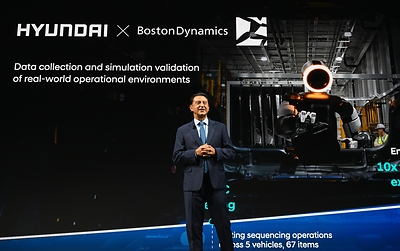
- Scaling robotics commercialization with Boston Dynamics, exploring distribution and financing, RMAC to expand ten-fold by end of year
- Hyundai N, Hyundai's Performance lineup will expand to 100,000 annual sales by 2030, joined by a new volume high-performance tier
- Genesis opens its second decade with its first hybrid, its first Extended Range EV and the GV90 flagship SUV, targeting 350,000 annual sales across more than 40 markets by 2030
- Robotaxi supply scales with Waymo deliveries beginning in the fourth quarter of 2026;U.S. robot production begins in 2028 with 30,000 units of annual capacity
- Autonomous driving roadmap set out in stages: Atria AI begins real-world data collection in Korea this year, Level 2+ arrives on the company's first mass-produced SDV in 2028 in collaboration with NVIDIA, and a 100-megawatt AI data center with more than 50,000 GPUs comes online from 2029
- In-house battery cells deliver more than double the output of previous high-nickel cells with 40% faster charging; new Thermal Runaway Protection technology debuts on the Genesis GV90
- 2030 operating profit margin target raised to above 9%, from the 8–9% guided previously, supported by a 3 percentage point reduction in the cost of sales ratio
- First-half 2026 results: 95.2 trillion won in revenue, a 5.6% operating profit margin, and market capitalization averaging 105 trillion won year to date
Visit the Hyundai Media_Hub for more content.
 View original content to download multimedia:https://www.prnewswire.co.uk/news-releases/hyundai-motor-company-charts-profit-driven-growth-roadmap-at-2026-ceo-investor-day-302860444.html