GCL SI Showcases Scenario-Based PV Solutions at SNEC 2026, Driving Application-Specific Solar Deployment and Low-Carbon Development
SHANGHAI, June 12, 2026 /PRNewswire/ -- GCL System Integration Technology Co., Ltd. ("GCL SI" or "the Company") has showcased its scenario-based PV solutions at the SNEC 2026 which was held in Shanghai, China from June 3 to 5. GCL SI showcased a comprehensive multi-matrix product portfolio, including high-efficiency TOPCon and BC modules, scenario-based component solutions, and mobile green energy systems. The exhibition highlighted the Company's latest achievements across four strategic dimensions: high-efficiency cells, scenario-based solutions, mobile energy, and ecosystem development.
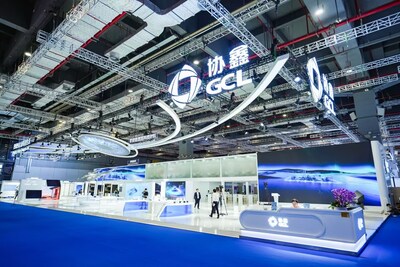
Advancing Application-Specific Solar Deployment
The photovoltaic industry is evolving from scale-driven growth toward value creation through more precise and differentiated applications. To address this shift, GCL SI showcased five scenario-specific module solutions: anti-dust modules for commercial and industrial applications, anti-glare modules for airports and highways, high-efficiency modules for utility-scale ground-mounted projects, steel-frame modules for 2,000V desert PV applications, and composite-frame modules for marine environments. Covering land, sea, high altitude, typhoon zones, and corrosive environments, this scenario-based approach is designed to address the varying performance, reliability and economic requirements of different deployment environments.
For extreme wind and high‑altitude environments, GCL SI's steel-frame modules offer twice the tear resistance of traditional aluminum frames, withstanding extreme wind conditions of up to 60 m/s in typhoon-prone regions while improving overall project economics compared with conventional aluminum-frame designs. For harsh high-salt, high-humidity and high-heat offshore conditions, the marine-specific modules feature double-coated glass, high-water-resistance encapsulants, and full-structure protection, passing top-level salt spray and rigorous reliability tests to solve corrosion, hot spot, and aging challenges. In the commercial and industrial distributed PV market, the S-series anti-dust modules combine high-density encapsulation, full-screen anti-dust design, and advanced sealing for enhanced reliability.
GCL SI's focus on product quality and reliability was further validated by its designation as a 2026 Kiwa-PVEL TOP PERFORMER, one of the photovoltaic industry's most widely recognized benchmarks for module performance and reliability.
Digitalization Supporting Low-Carbon Value Creation
GCL SI, together with Ant Digital Technologies, launched "GCL Carbon Chain 3.0" at SNEC 2026 and initiated the Carbon Chain 4.0 roadmap.
Leveraging GCL SI's deep industry expertise in PV manufacturing, supply chain management, and low-carbon product innovation, and supported by Ant Digital's blockchain, AI and digital technologies, Carbon Chain 3.0 establishes a product carbon footprint monitoring and verification mechanism. The platform integrates carbon footprint management across procurement, manufacturing and delivery processes, enhancing transparency and supporting low-carbon value creation throughout the supply chain. Additionally, GCL SI has enhanced its integrated "module + green certificate" service capability, offering green asset solutions for both domestic and international markets.
GCL SI is also translating its application-driven strategy into international markets through targeted partnerships. In Africa, the company is collaborating with PowerChina Guiyang Engineering Corporation to develop off-grid integrated solar-storage solutions. In Latin America, GCL SI is deepening its strategic partnership with Coexito to strengthen channel presence and brand positioning.
On the ecosystem front, GCL SI is working with Ant Digital Technologies and Digital China to advance digital energy ecosystem development, integrating blockchain, AI, and data governance to build a smarter, more connected clean energy future.
Looking ahead, GCL SI believes the next phase of solar industry growth will be driven by solutions that deliver superior performance, sustainability, and application-specific value. The company will continue to advance technologies that support the evolving needs of global energy markets.
Photo - https://mma.prnewswire.com/media/2996595/9c56599875b056fa1baedecb0ed8295c.jpg
 View original content:https://www.prnewswire.co.uk/news-releases/gcl-si-showcases-scenario-based-pv-solutions-at-snec-2026-driving-application-specific-solar-deployment-and-low-carbon-development-302798756.html